This weeks lectures were really interesting because it talked about different things and some that I never knew were connected. First off, it continues to surprise me the way that art is correlated with science especially the human body. Before when I looked at the images provided in the lectures by Joseph Gall and Paul Broca I just thought of them as a simple illustration but now its an important art form and without it we would never have understood what these artists/scientists were talking about. Suzzane Ankers work was incredible and before this I had never heard of her. In an article by Regine on Suzzane Anker it is explained that Anker used these images because with them, "one begins to assess new meanings:bones, sea creatures, body parts. These are surrogates for the imagination itself, opening up a dialog between the mind and body. What happens when you pick up a psychology test in your hand? The mind essentially has been embodied." (Regine, Common Sence). Which helps explain this new thing with sea sponges. In the article "From Sea Sponge to HIV Medicine" we see that scientists were able to find 2 chemicals that have been used as anti viral and anti cancer drugs. This I think is awesome, which is great because unlike last weeks topic and ethical questions I believe that this use of sea sponges is great and should continue to be used.
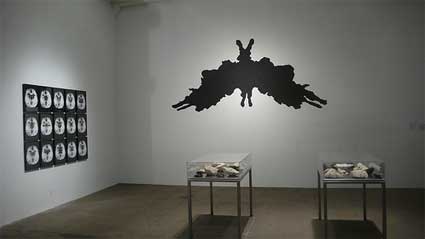
Moreover, I never knew that cocaine and LSD were used to experiment and that people actually wrote books on the dreams they had. I personally also agree that using these drugs are bad and they shouldn't be used to experiment especially on people but I understand that the before people didn't really know about the powerful addiction these drugs have. As expressed in "Effects of Cocaine" from the Drug Free World these drugs are not good to use because people become fiend's meaning with each new dose they want more than the next which leads to death at times.
In conclusion, this section still leaves me wondering with why do we remember some dreams and not others. Also, what do they mean or do they even mean anything. In an article from the New York Times, Benedict Carey explains that "Dreams are so rich and have such an authentic feeling that scientists have long assumed they must have a crucial psychological purpose."(Benedict, NY Times) Kendra Cherry also wrote an article and explained they will forever continue to be studied. With this we can see that the brain is a wonderful and mysterious work of art.

References:
Regine, Brain Waves:Common Sense. March 26, 2008
http://we-make-money-not-art.com/archives/2008/03/brainwave-common-senses.php#.VVmHDjHF81I
"From Sea Sponge to HIV Medicine" Ocean Portal. Find your Portal. Smithsonian Natural Museum of Natural History.
http://ocean.si.edu/ocean-photos/sea-sponge-hiv-medicine
"Effects of Cocaine". Drug Free World.
http://www.drugfreeworld.org/drugfacts/cocaine/effects-of-cocaine.html
Benedict, Carey. "A Dream Interpretation: Tuneups of the Brain" New York Times. Web. Nov 2009.
http://www.nytimes.com/2009/11/10/health/10mind.html?_r=0
Cherry, Kendra. "Dream Interpretation, What do dreams mean"About Education
http://psychology.about.com/od/statesofconsciousness/p/dream-interpret.htm

No comments:
Post a Comment